Guildford, Surrey Real Estate 2026: Why It is the Surrey Surprise
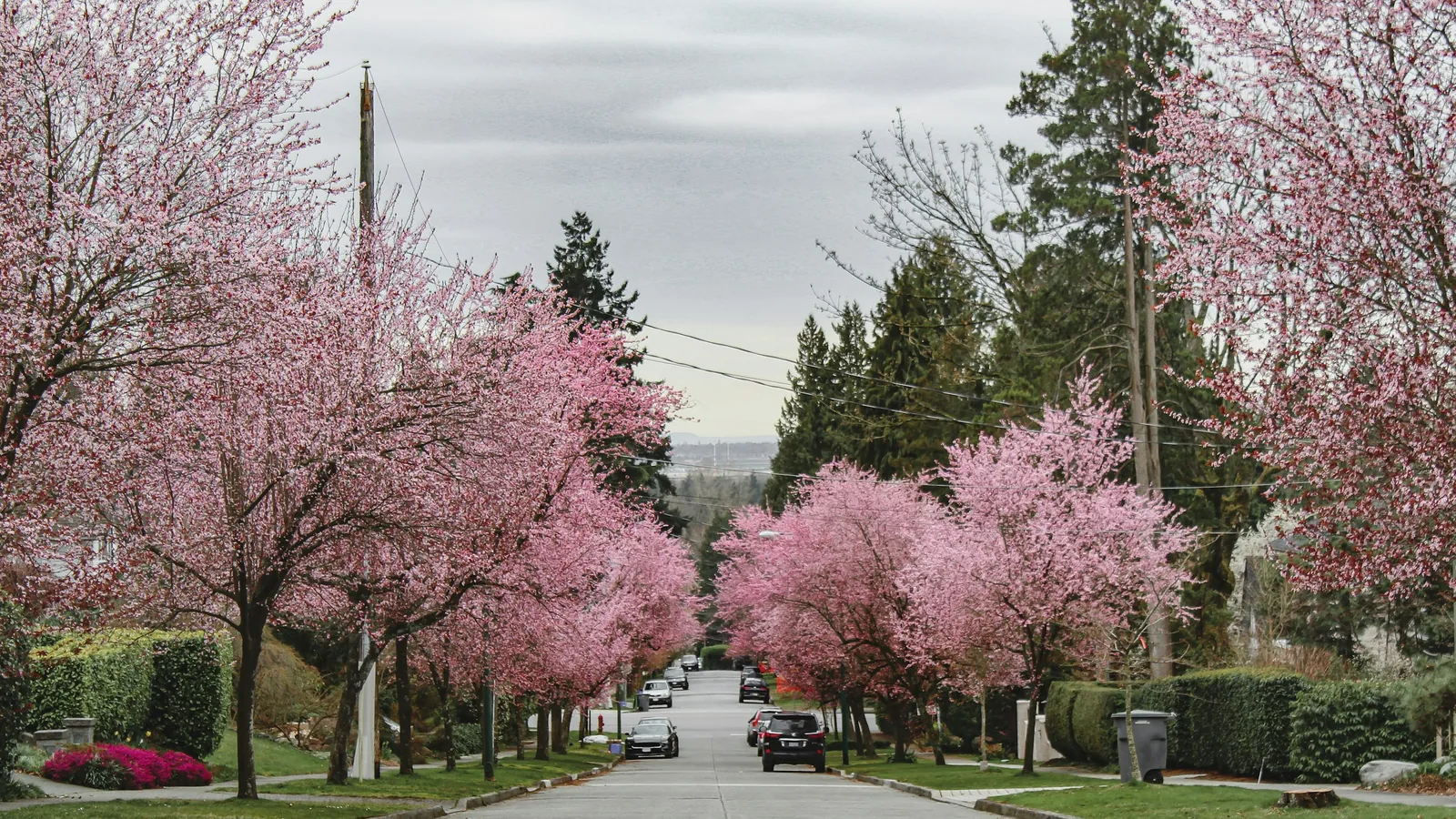
Photo by Unma Desai on Unsplash
Guildford is the Surrey neighbourhood that does not get the attention it deserves. Surrey City Centre gets the new towers and the transit headlines. Cloverdale gets the heritage marketing. Newton gets the affordability stories. Guildford — older, more established, walkable, with a mature housing stock and one of the best-positioned commercial cores in the city — quietly holds prices, attracts steady end-user demand, and gives buyers an opportunity that the louder Surrey neighbourhoods do not match. If you are buying in Surrey in 2026, Guildford deserves a serious look.
What Makes Guildford Different from the Rest of Surrey
Geographically, Guildford sits in the northeast quadrant of Surrey, bounded roughly by 96 Avenue to the south, 108 Avenue to the north, 144 Street to the west, and 160 Street to the east. The defining feature of the neighbourhood is its maturity: developed primarily in the 1960s through the 1980s, Guildford has the kind of mature tree canopy, established residential streets, and integrated commercial nodes that newer Surrey developments take 30-40 years to develop. Walk down a residential street in Guildford in late spring and you will pass through a continuous canopy of mature maples, cedars, and oaks. Compare this to the bare-lot subdivisions in newer South Surrey or Clayton Heights, and the difference is immediate.
The neighbourhood is anchored by the Guildford Town Centre — the largest enclosed shopping mall in Surrey and one of the largest in the Lower Mainland — plus a network of smaller commercial cores along 152 Street, Fraser Highway, and the 104 Avenue corridor. This commercial density is unusual for a Surrey residential neighbourhood; most parts of Surrey are zoned for residential-only or have only small commercial strips. In Guildford, you can walk or drive 5-10 minutes from most homes to substantial daily shopping, restaurants, medical services, and entertainment. The combination of mature trees, established homes, and significant commercial amenity is genuinely rare in Metro Vancouver outside of Vancouver itself.
Housing Stock and 2026 Pricing
The Guildford housing stock is dominated by single-family detached homes from the 1960s-1980s, with a meaningful overlay of newer infill and townhome development. Detached homes typically range from $1.1 million for older homes on standard lots in need of updating, to $1.8 million for renovated or rebuilt homes on premium lots. The market dynamic favours buyers willing to take on renovation projects — there is real value-add potential in updating original-condition Guildford homes, and the underlying lot sizes (typically 7,000-10,000 square feet) are larger than what newer Surrey developments offer.
Townhomes are a major segment, with pricing typically ranging from $650,000 for smaller two-bedroom units in older complexes to $1.1 million for newer three-bedroom-plus-den layouts in the more recent developments. Apartment-style condos run from $400,000 for smaller older units in the central Guildford area near the mall, up to $850,000 for newer two-bedroom units in the buildings going up along the 104 Avenue corridor.
What makes the Guildford pricing particularly interesting in 2026 is how it compares to other Surrey neighbourhoods. A detached home in Guildford at $1.3 million buys you a 2,400 square foot family home on a 9,000 square foot lot under a mature tree canopy, walkable to the mall and a Skytrain station. The same money in Cloverdale buys you a newer but smaller 2,000 square foot home on a 4,500 square foot lot in a treeless subdivision. In South Surrey, the same money buys you an older townhome. In Surrey City Centre, you get a condo. The dollar-per-square-foot economics of detached homes in Guildford genuinely outperform most other Surrey submarkets — buyers just have to look past the lack of marketing gloss.
Skytrain Expansion and the 2030 Vision
The single biggest catalyst for Guildford pricing over the next five years is the Surrey-Langley Skytrain extension, which will extend the Expo Line east from King George Station with new stations at 152 Street, 160 Street, 166 Street, 184 Street, and the Langley terminus at 203 Street. The 152 Street and 160 Street stations sit directly within Guildford catchment, and the line is currently under construction with target opening of 2028. Once complete, Guildford residents will have a 25-minute rapid transit ride to downtown Vancouver, compared to the current 50-60 minute bus-and-Skytrain combination.
The pricing implication of major transit improvements has been well-documented across Metro Vancouver. The Evergreen Line opening in 2016 lifted Coquitlam pricing 15-25% in the surrounding catchments over the following five years. The Canada Line opening in 2009 had similar effects in Richmond. For Guildford, the 2028 Skytrain extension is the single most-anticipated infrastructure event in the neighbourhood's history — and the pricing premium for properties within 5-10 minutes' walk of the future 152 Street station is already starting to build.
Schools, the Mall, and Daily Life
Guildford is served by Hjorth Road Elementary, Hyland Elementary, Forsyth Road Elementary, and several other public elementary schools across the neighbourhood, with North Surrey Secondary as the dominant catchment high school. School quality varies meaningfully by specific catchment, so buyers should verify the exact school for any property they are considering. Hjorth Road and Hyland in particular have strong reputations among Surrey families.
The Guildford Town Centre mall is the daily-life anchor for the neighbourhood. With over 200 stores, a major movie theatre, food court, and the kind of large-format anchor tenants (department stores, electronics, home goods) that you would need a Highway 99 trip from most of South Surrey to access, the mall is genuinely useful infrastructure rather than just a retail destination. The surrounding streets host independent restaurants, the Surrey City Library branch, the Guildford Recreation Centre with pool and ice rink, and the kind of established services — medical, dental, optometry, fitness — that take decades to develop in a neighbourhood.
Why Guildford Is a Buyer Thesis Right Now
If you are looking at the Surrey real estate market in 2026, the Guildford thesis comes down to four points. First, the housing stock offers strong value-per-dollar relative to newer or more marketed Surrey neighbourhoods — particularly for buyers willing to renovate. Second, the 2028 Skytrain extension is a clear price catalyst with historical precedent in Metro Vancouver. Third, the established commercial amenities and mature tree canopy create a lifestyle that newer Surrey subdivisions cannot replicate. Fourth, the buyer pool is dominated by end-user families, which produces less volatile pricing than the speculator-heavy parts of the Surrey market.
The case against Guildford in 2026 is essentially one of perception — it is not the trendy Surrey story, and some segments of the market continue to price newer-equals-better. If you do not care about being early on a story, that perception gap is your edge as a buyer.
If you are weighing Guildford against Cloverdale, Newton, Fleetwood, or any other Surrey submarket and want a head-to-head comparison on your specific buying criteria, book a free 30-minute consultation. We will go through the specific properties on the market this week, run the math on your target hold period, and produce a clear position one way or the other. The right Surrey neighbourhood for you is the one whose numbers work for your situation — and Guildford should be in that conversation in 2026.

Have Questions About This Topic?
Get personalized advice from Rose Marie about your real estate goals.
Book a Free Consultation